Brighton Tram 53 Society
Advertising Advert Revenue Income
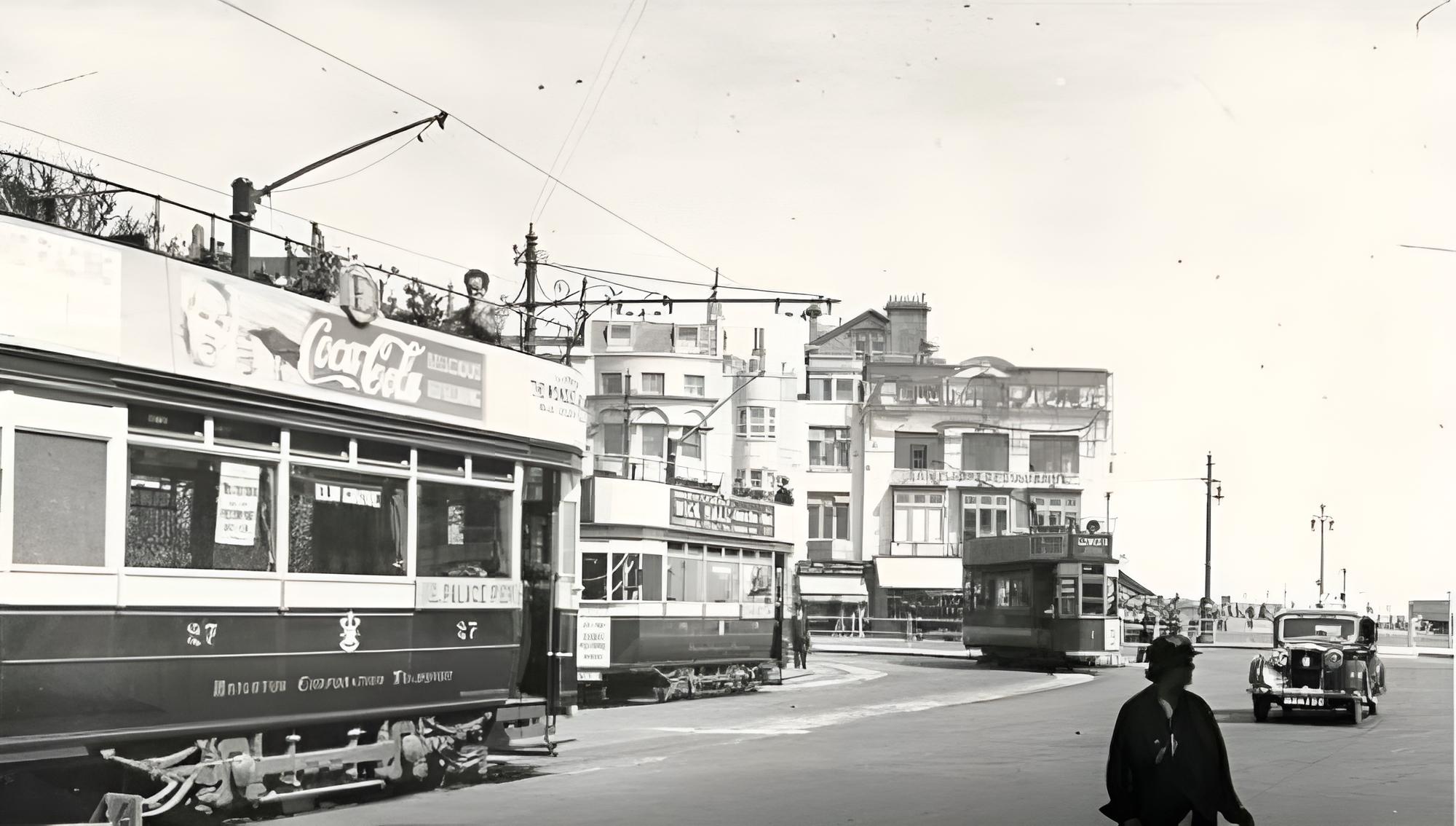
Historic photographic evidence shows advertisements for a wide range of well-known products and companies. These included major international brands such as Coca-Cola, Bovril, Schweppes, Persil and Kellogg’s.
Local companies would often take one of the smaller advertising boards for just a single day, while many advertisers would book their boards for much longer periods.
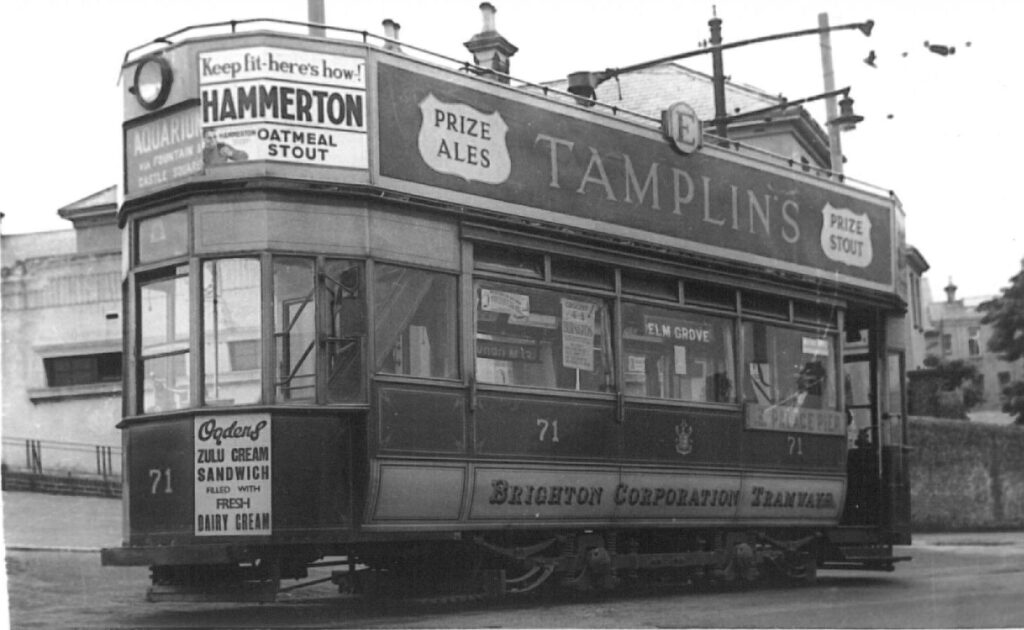
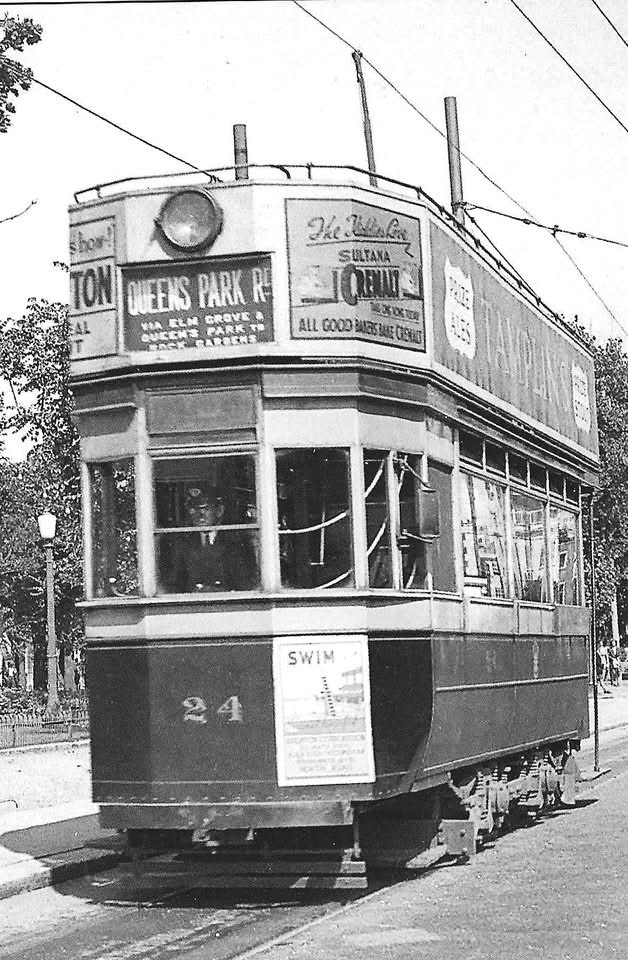
One Brighton company you will see often in historic pictures is Tamplin Brewery who spent a large porportion of their advertising budget with the Corporation Tramway.
Historical Photographs also show the later trams could be covered extensively, including the staircase risers.
The clever part was the constant movement of the advertisements around Brighton.
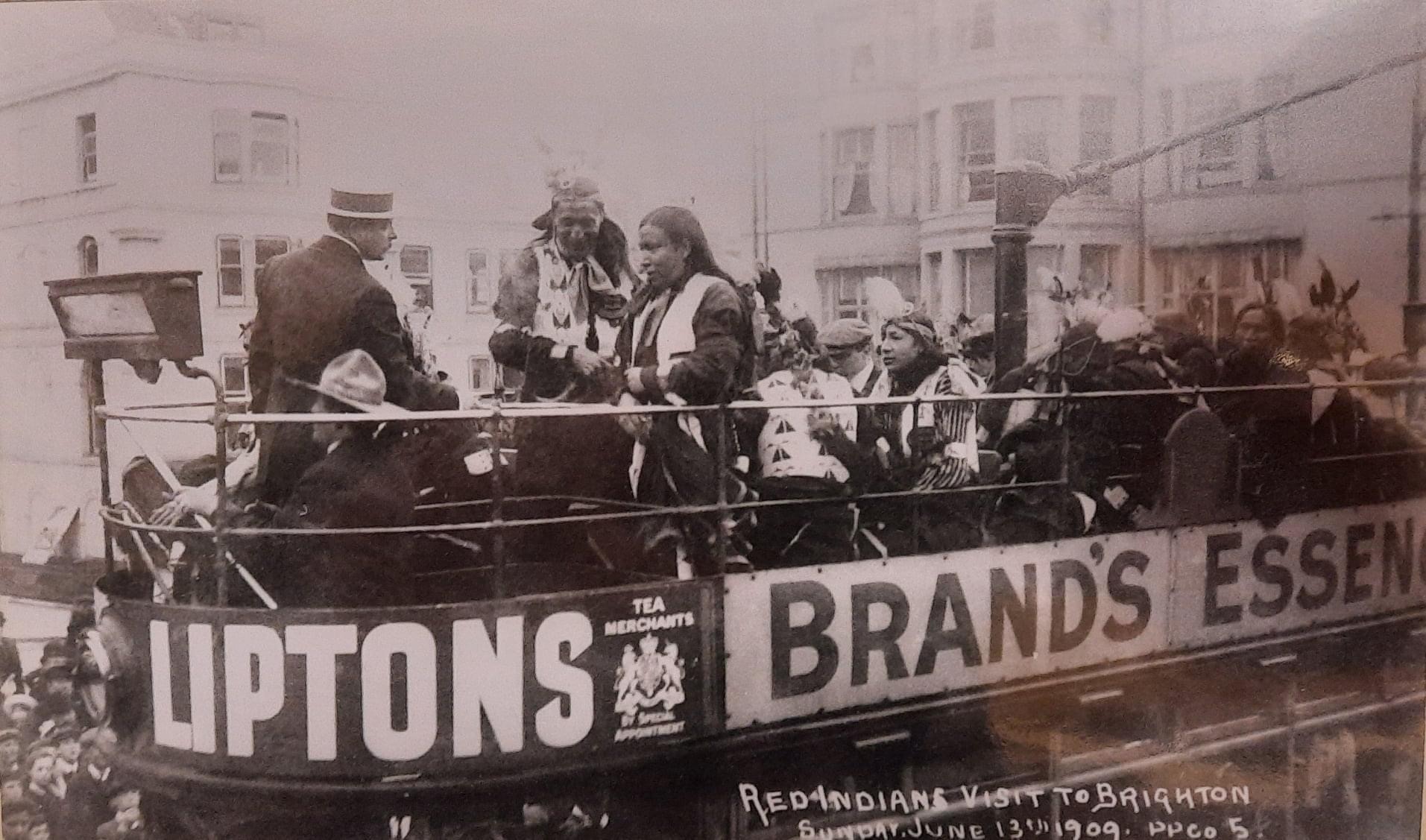
A stationary billboard might be seen by the public only once or twice a day, whereas a tram advertisement would travel throughout the town, passing the same locations, stopping at a tram stop approx every three to four minutes, many times each day. This gave advertisers an unprecedented level of exposure—advertising on such a scale had never been seen before.
Lewes Road → London Road → Old Steine → Palace Pier → Queen's Park → Preston → Dyke Road → Five ways covering nearly every busy street where there were loads of people.
So one advertisement could be seen by pedestrians, motorists, shopkeepers and passengers throughout the town and throughout the day as the trams came on to the streets between 6.30am - 7.00am and finished 11.00pm - Midnight seven days a week.
Brighton's open-top trams gave advertisers an additional advantage: the tramcars were highly visible above ordinary street traffic.
It is useful to think of Brighton Corporation Tramways as having two major income streams:
1.Passenger fares
Passengers paid to travel on the tramway, providing by far the largest and most fundamental source of income for the business throughout its 38 years of operation.
2.Advertising
Businesses paid the Corporation for the right to use parts of the tramcars to promote their products.
Tickets
There were also other miscellaneous sources of income. Interestingly, the Corporation even used its tram tickets themselves for advertising. Surviving 1930s Brighton Corporation tickets contain advertisements, including advertisements connected with Corporation activities.
Local business and events made sure there was always something to read on your ticket adding to the Corporations income.
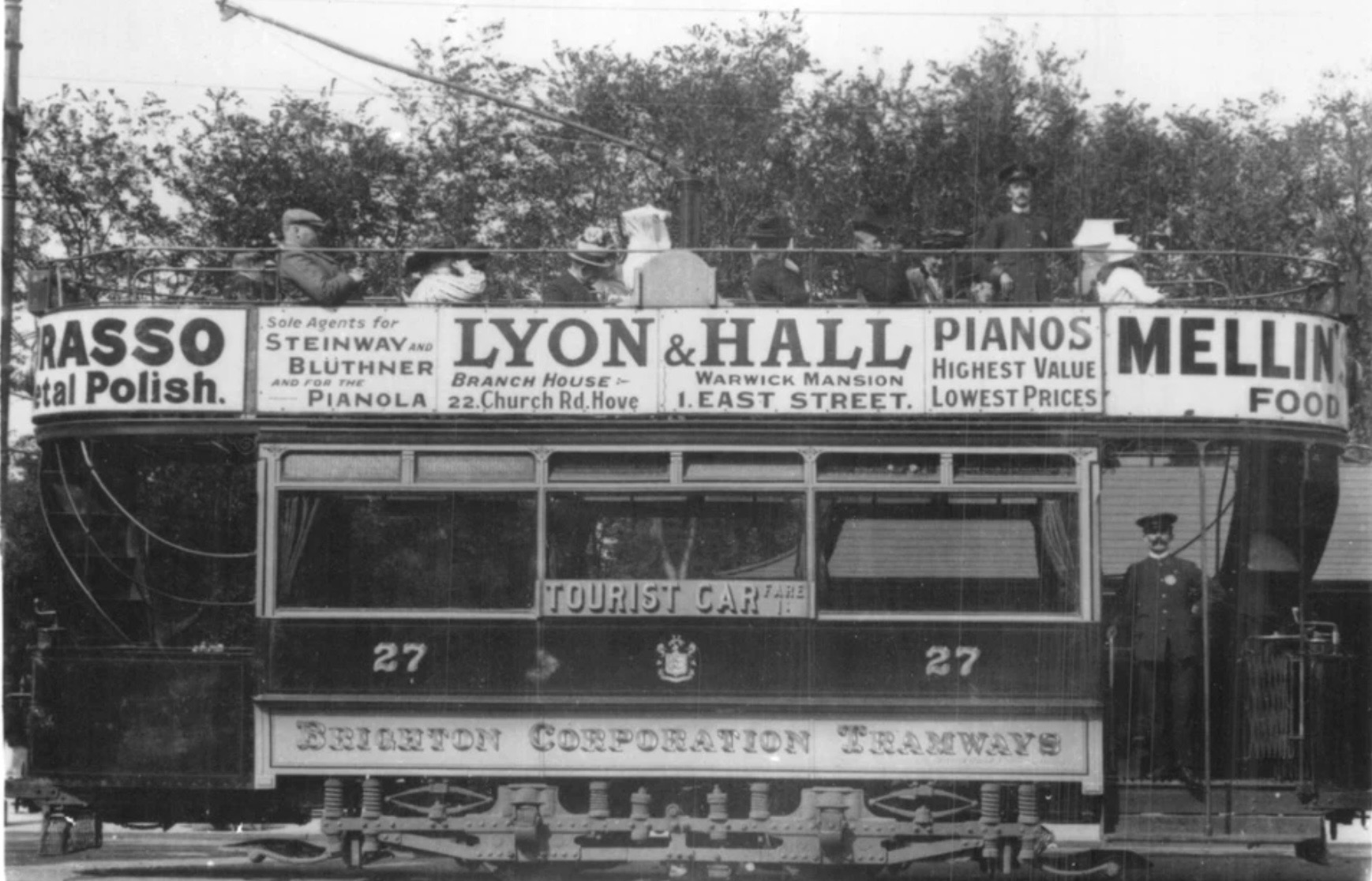
The Brighton tramway made a profit every year from 1905 onwards, over its 38-year life the recorded total profit was approximately £54,000+ (2026 £4,000,000+).
That is particularly significant because Brighton Corporation was not operating the tramway purely as a commercial private company. The profits ultimately went back into the Corporation Town's finances.
So advertising helped Brighton achieve something quite unusual:
The passengers paid to use the tramway, while businesses also paid to use the tramway as an advertising medium.
In other words, the same tramcar generated income twice — first by carrying passengers and second by carrying advertisements.
William Marsh