
Brighton Tram 53 Society - Battle of Lewes Road
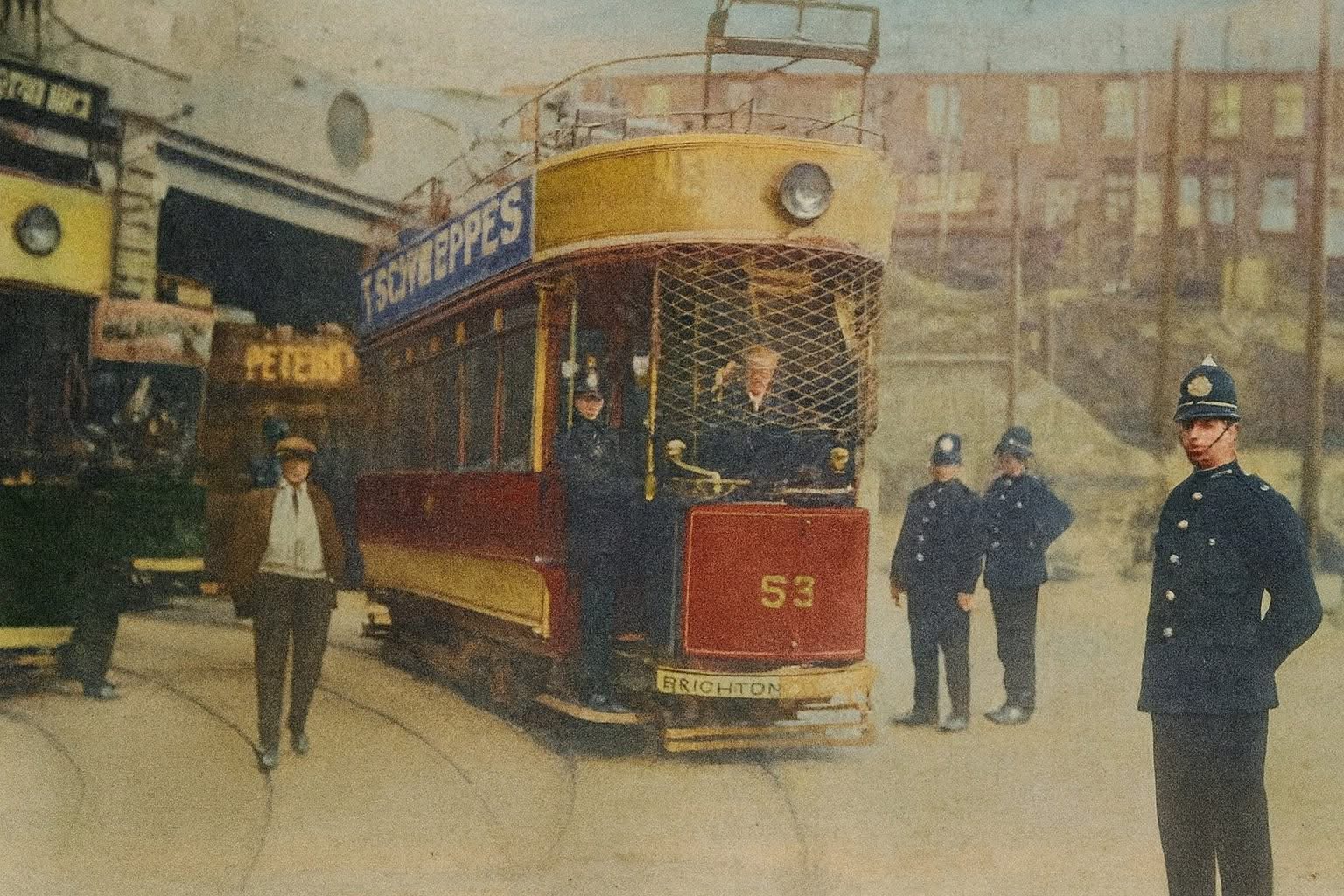
What makes the story particularly interesting for the history of Brighton Corporation Tramways is that the battle was not actually about a tram service that was running. It was about the attempt to prepare volunteer workers to operate the trams and thereby break the transport workers' strike. The crowd believed that the Corporation was about to put trams back into service, and that misunderstanding helped turn an already tense situation into a major confrontation.
The background — why the General Strike happened
Britain's General Strike began in May 1926 after the coal owners sought reductions in miners' wages and changes to working conditions. The Trades Union Congress called a general strike in support of the miners.
Brighton responded particularly strongly. The railway engineering works were brought to a standstill and, by 4 May, the town's transport system had effectively stopped. Contemporary accounts describe Brighton as having one of the strongest responses to the strike in southern England.
For Brighton Corporation, this presented a serious problem.
The Corporation’s tramway was an essential part of everyday life: workers depended upon it to reach employment, businesses depended upon public transport, and the Corporation depended upon the tramway for revenue.
But the tramway employees were involved in the strike and Brighton's trams stopped running and that is where the story of Lewes Road begins.
The centre of the confrontation was the Brighton Corporation Tramways depot Tramway House in Lewes Road.
The depot was not simply a garage for tramcars. It was the headquarters of the Corporation's tramway operation, containing offices, workshops and the facilities required to maintain the tramcars, it represented the Corporation's ability to restart the city's public transport.
And the striking transport workers knew it.
As the strike continued, the Brighton Corporation began considering whether volunteer labour could be used to operate the tramway. This was enormously provocative to the striking tramway employees.
The prospect caused increasing tension.
On 8 May, approximately 2,000 strikers marched to Brighton Town Hall because the Corporation was considering using volunteer labour on the trams. They hoped to make their feelings known directly to the council.
They were not received. The police prevented the demonstrators from entering the Town Hall.
The atmosphere in Brighton became increasingly hostile.
The next day, an extraordinary incident involving a woman tram driver dramatically increased the tension.
A smaller crowd of approximately 200 people gathered around the Town Hall. According to the historical account preserved, a woman tram driver approaching the protesters deliberately accelerated towards them, injuring several people. Police removed strikers who mounte the tramcar with their truncheons, while the tram continued into the town.
This incident became part of the growing belief amongst the strikers that the Corporation was determined to defeat them.
The tramway had therefore become the physical symbol of the struggle between the Corporation and the striking workforce.
Tuesday 11 May 1926. Then came the event that would become known as: The Battle of Lewes Road.
The crowd believed the Corporation would bring trams out of the depot using strike-breakers, but there was an important twist.
The Corporation was not actually intending to put the trams into service that day. The volunteers were being brought together for training.
The intention was to prepare them to operate the tramway, rather than immediately send a fleet of trams into the streets; the crowd outside the depot did not know this.
From their perspective, the volunteers and the enormous police presence suggested the Corporation was preparing to break the strike; this misunderstanding was critical.
At the time, Brighton's Chief Constable was Charles Griffin and was in control of the police presence
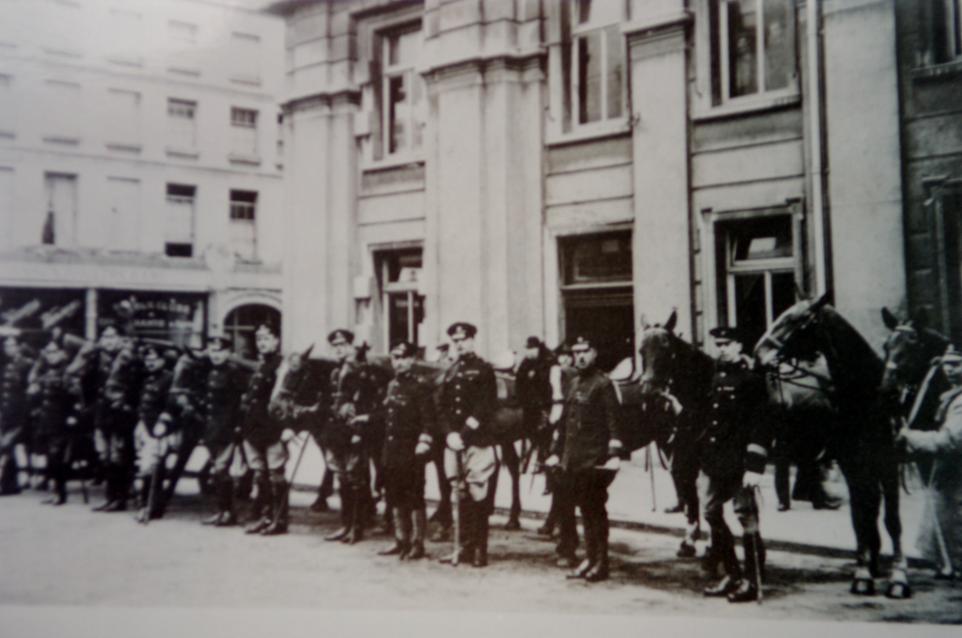
The authorities had deployed a very substantial police force.
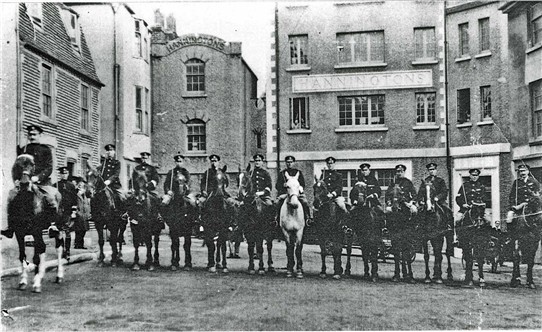
The special constables were volunteers recruited (known to the strikers as the Black & Tans) to supplement the regular police during the General Strike.
They came from a very different social background from many of the people in the crowd. Contemporary and later accounts describe them as including businessmen, farmers, sportsmen and former military personnel; among those involved was the well-known Brighton businessman and sporting figure Sir Harry Preston. He was 66 years old and served as a mounted special constable during the strike.
Chief Constable Griffin ordered the crowd to disperse; they refused, and the police then began advancing. The foot police moved first. The crowd was pushed back along Lewes Road towards Hollingdean Road. At this point, the confrontation became violent.
Next, the mounted special constables charged into the crowd; batons were used, and the crowd resisted. Accounts differ considerably over precisely what happened next — and this is important if you are reading the story historically.
Some accounts portray the crowd as becoming violent and attacking the police. Other eyewitness accounts, particularly those preserved within the labour movement, argue that the mounted police initiated the violence by charging and striking demonstrators.
One eyewitness account from a former soldier stated that the mounted police charged into the crowd without giving what he regarded as an adequate warning, striking people with batons. He believed this provoked the retaliation from the crowd.
The University of Brighton's Battle of Lewes Road project deliberately highlights these conflicting eyewitness accounts because the history of the event cannot simply be reduced to one uncontested version of what happened. What is not disputed is that a serious physical confrontation took place.
The crowd was eventually pushed back towards Hollingdean Road and many people were injured. The tram depot remained in police hands.
But crucially: No normal tram service was restored that day. The purpose of the Corporation's volunteers was to prepare for the possibility of operating the tramway. The battle was therefore essentially a confrontation over whether the tramway could be used to break the strike. The immediate reports refer to 17 arrests during the Lewes Road confrontation, but the story did not end there.
Later that evening there was another disturbance near the Brighton and District Labour Club in London Road. A further five people were arrested. That produced the often-quoted total of: 22 people arrested The 22 subsequently appeared before Brighton magistrates.
The surviving record is remarkably detailed.
The University of Brighton's 2026 centenary project has reproduced the names and details of those prosecuted. The 22 men faced 42 charges in total.
Among the defendants were railway workers, labourers and other working men. Some were accused of offences under the emergency regulations introduced during the strike, while others faced charges relating to assaults on police or throwing missiles. Several received prison sentences. The University of Brighton notes that the men ultimately imprisoned received sentences ranging from two to six months in the historical account of the event. And then — the General Strike ended.
The timing of the whole story is remarkable. The General Strike was called off by the Trades Union Congress on 12 May 1926, so the confrontation at the tram depot happened the day before the strike ended. The men arrested at Lewes Road were therefore prosecuted after the national strike itself had effectively finished.
For many people in Brighton's labour movement, this added enormously to the bitterness, they believed that the men had been punished for attempting to defend the strike at precisely the moment when the national leadership was ending it. What happened to the tram workers? The consequences for some Brighton transport workers were serious. Some striking transport workers were not reinstated by their employers after the strike. The tramway had therefore become more than just the location of a confrontation. For the workers, it represented their employment and their ability to organise collectively. For the Corporation, it represented the city's essential public transport system. For the authorities, keeping the depot under control was part of maintaining public order and for the strikers, preventing volunteer workers from operating the tramcars was an essential part of maintaining the strike.
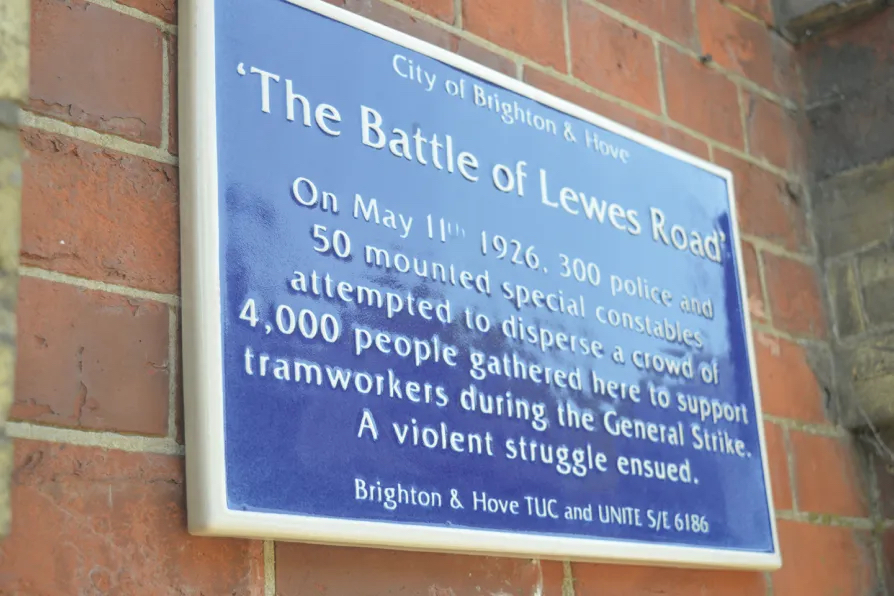
The special constables and the controversy afterwards. One of the most interesting parts of the story is what happened after the fighting. There was considerable resentment within Brighton's labour movement towards the special constables.The regular police were viewed differently from the volunteers. The mounted specials were particularly unpopular. According to historical accounts, a celebratory dinner was subsequently held for the special constables. For people on the other side of the confrontation, this was deeply provocative. It reinforced the belief that the authorities regarded the confrontation as a victory over the striking working class.
Consequently, two completely different memories of Lewes Road emerged.
To supporters of the Corporation and authorities, the confrontation demonstrated that public order had been maintained.
To the labour movement, it became an example of the use of police power against ordinary working people attempting to defend the strike.
Why was it called a "battle"?
It is worth stressing that this was not a battle in the military sense, there were no firearms, no opposing armies and no organised military units. The word "Battle" emerged because of the scale and violence of the confrontation. Thousands of people were involved or present, and hundreds of police and special constables were deployed.
The phrase became embedded in Brighton's social history.
The University of Brighton describes it as a significant part of the city's labour and social history, and its 1983 documentary The Battle of Lewes Road: Our History used eyewitnesses, newspaper reports and photographs to examine what actually happened.
The extraordinary connection with Brighton Corporation Tramways, for the history of Brighton Corporation Tramways, there is an important lesson here.
The tramway was one of the great symbols of Brighton's historic modernisation of public transport.
Since 1901, electric trams had transformed how people travelled around the town becoming an inclusive part of their lives.
But in 1926 the same tramway became the focus of one of the most bitter industrial confrontations Brighton had ever experienced.
The Lewes Road depot became the frontline.
The tramcars themselves were almost incidental.
The real issue was:
Who controlled the tramway — the Corporation and its replacement workforce, or the tramway employees who had withdrawn their labour?
What happened to the depot? The original Corporation Tramways site on Lewes Road survived long after the tramway itself disappeared. The site is now associated with Brighton's bus operations/Brighton Electric, but it retains its extraordinary historical connection to the events of 1926.
And in May 2026 — exactly 100 years later — a blue plaque was unveiled at the former tram depot site commemorating the Battle of Lewes Road.
The House of Commons also recognised the centenary, where the plaque and the events of 11 May 1926 were specifically discussed.
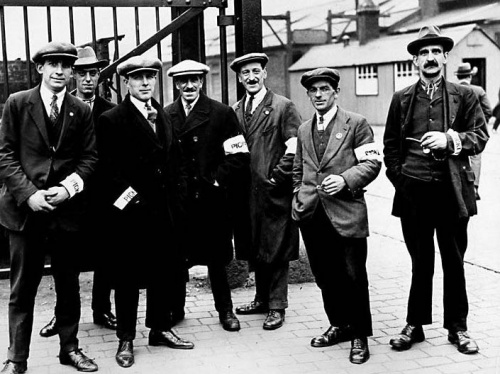
The story in one timeline
Date What happened 1–3 May 1926 The national crisis develops and the General Strike begins.
4 May The strike takes hold in Brighton; transport services, including trams stop.
8 May About 2,000 strikers march towards Brighton Town Hall over proposals to use volunteers on the tramway.
9 May Further tension develops around the tramway and Town Hall
10 May Preparations continue for volunteer tramway workers.
11 May Battle of Lewes Road — around 4,000 people gather at the Corporation tram depot. 11 May Around 300 foot police and 50 mounted specials confront the crowd.
11 May Fighting breaks out; mounted police charge the crowd.
11 May 17 arrests are made at Lewes Road.
11 May Further disturbance at London Road; another five arrests.
12 May General Strike is called off.
12 May 22 defendants appear before Brighton magistrates.
It is tempting to say:
"The Battle of Lewes Road happened because the Corporation tried to run trams."
That isn't quite accurate. A better historical description is:
The Battle of Lewes Road arose from the Corporation's attempt to prepare volunteer workers to operate the tramway during the General Strike. Thousands of strikers and their supporters believed that the Corporation was about to use strikebreakers to put the trams back into service. The resulting confrontation between the crowd and the police and special constables outside the Lewes Road tram depot became known as the Battle of Lewes Road.
That distinction matters because it makes the story more powerful: the trams were not merely in the background—control of Brighton's tramway was at the heart of the confrontation..
There is also an excellent 1983 University of Brighton documentary, The Battle of Lewes Road: Our History, containing photographs, newspaper cuttings and interviews with eyewitnesses, including people connected with both sides of the events. Watch the University of Brighton / Screen Archive record for the 1983 documentary.
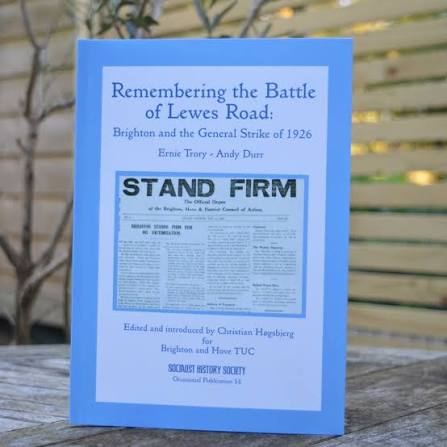
And because 2026 is the centenary year, there is now substantially more material available than there was previously, including the University of Brighton's newly published Remembering the Battle of Lewes Road: Brighton and the General Strike of 1926, which reproduces the 1970s accounts of Ernie Trory and Andy Durr.
The background — why the General Strike happened Britain's General Strike began in May 1926 after the coal owners sought reductions in miners' wages and changes to working conditions. The Trades Union Congress called a general strike in support of the miners.
Mary C. Bannister, 1, Gladstone Place
A eye-witness accounts of the Battle of Lewes Road On Tuesday morning May 11th, I was outside of the Tram Depot when Mr. Marsh came out and stated that 200 mounted and foot police were coming and appeal to the crowd to go away and said for god's sake men don't let their be any trouble, go home. I went into the recreation ground and stood opposite the main enterance of the Tram Depot. I helped to get children over the wall into the ground for safety, and advised women with prams to clear away. Along came the poice on foot, then a motor covered over with a brown tarpaulin, after this volunteersto take out the cars. The foot police moved the crowd towards Falmer. Then something happened, the specails, mounted, and foot police seemed to go mad. They rushed the crowd and arrested a man against the depot wall and pushed him into gate, jobbing him in the back. Then the mounted special and regular police rushed the recreation ground pushing men, women and children against the wall. I saw a little girl about 10 years of age screaming and tearing her hair out. I said "don't be affraid and you will be alright with me." I turned to those on horse back and sai " I appeal to you as Englishman, as a man, as an Ambulance man, to let these women and children go." One reared his horse up and I pushed the little girl into safety and told her to run off. The mounted special then said "Get Out" and a regular policeman mounted cut me a blow across the right shoulder. He then rushed out of the gate in Hollingdean Road right across the road on to the pavement where his horse slipped and there were women, and children in prams, also a lot of children they had driven out of the recreation ground standing on the pavement. He then drove us down Hollingdean Road into Lewes Road and then up Gladstone Place where I pushed into a gateway and fell down an area stepsin mendeavour to get out of the way and into safety. The way I got home was, when the dinner bell of Bennets went, the stonemasons men went home I mingled with them and so got home.
A. Packham, 16 Roundhill Street, Brighton
A eye-witness accounts of the Battle of Lewes Road In regards to this affair in Lewes Road, the whole affair was treacherous as being an eye witness and coming through it. women and children knocked about by those heroes on horseback, just as the children were coming home from school and I myself being on crutches just got half way through the crowd outside the Depot when they made a charge, they came through as if they were made, one special on horseback jumped over the wall into the recreation park where women and children were for safety and other went into the park and frightened the little children to death. also some of the foot police were very insolent to the women who were looking for their children. my two children 5 & 7 have been under the doctor owing to fright and delirous caused through the men on horseback.
Y.J. Harrison, 29 Coombe Terrace The names of the 22 demonstrators who were arrested and received a magistrates sentenced on Wednesday 12th May 1926
The charges out of the disturbances in Lewes Road and London Road were dealt with at a sitting of the Brighton Magistrates on the morning of Wednesday 12 May. There were 22 prisoners concerned in 42 charges as follows:-
1 George Richardson. 49, 167 Havleock Road, Southern Railway Employee, unlawfully committing an offence against the Emergency
Regulation 1926, duty made pur to the Emergency Powers Act, 1920. In that he did an an act calculated or likely to cause disaffection among the civilian population, to with incite certain persons to riot, on 11thMay, £5 fine paid..
2 William Batchelor, 26, 86 Picton Street, Southern Railway Lifter, 1 month, like offences,
3 Arthur James. Mitchell, 56, 42 Hendon Street Kemptown, Labourer, 2 months like offences.
4 Albert Lawrence, 48, 17 Franklin Street, Goods Porter, a like offence, assaulting Detective Sergeant Thomas Wells while in the execution of his duty, on 11th May, and assaulting P.C. Robert Minton, while in the execution of his duty, on 11thMay, 6 months.
5 John Lawrence Knight, 43, 31 Millers Road, Southern Railway Driller, throwing a dangerous missile, to wit a stone, with intent to injure (Emergency Regulations, 1926), and assaulting Detective Sergeant Thomas Wells while in the execution of his duty, on 11th May, 4 months.
6 Percy Isaac Sawyer, 35, 66 Ewart Street, Southern Railway Hammerman, throwing a missile, 3 months.
7 Joseph Alfred Vinall, 21, labourer, inciting to riot, discharged mental.
8 Fred King, 39, 74 Franklin Street, Labourer (Tramways), inciting to riot, assaulting Special Constable Bernard Dutton Briant, while in the execution of his duty, and assaulting Special Constable Dudley Marriott Broughton Vanqulin, while in the execution of his duty, on 11th May, 6 months.
9 William Joseph Knight, 32, 45 Arnold Street, Tram Conductor, inciting to riot, on 11th May; inciting to riot on 5th May; assaulting P.C. Alfred Phillips while in the execution of his duty on the Old Stiene, on 5thMay; and assaulting P.C. Thomas Humberstone while in the execution of his duty, on Maderia Drive, on the 5th May, 6 months.
10 John Walkden 24, 41 Park Cresent Road, Southern Railway Labourer, inciting to riot, and assaulting P.C. Archibald Soul while in the execution of his duty, on 11th May, 4 months.
11 Charles Marchant, 19, 12 Southover Street, Bottle Washer, inciting to roit, 40/-.
12 George Edward Newton, 29, 67 Hartington, Labourer (Tramways), inciting to riot on 11th May; assaulting P.C. James Beedle, while in the execution of his duty, on 11th May; inciting to riot on 5th assaulting P.C. Thomas Humberstone while in the execution of his duty, on Maderia Drive, on the 5th May, 6 months.
13 Sidney Arthur Higgs, 25, Welder, inciting to riot, on 11th May.
14 William Jones, 41, 6 Tichbourne Street, Boot Operative, inciting to riot, on 11thMay; inciting to riot on 5th may; assaulting P.C. Thomas Humberstone while in the execution of his duty, on Maderia Drive, on the 5thMay; and assaulting P.C. Alfred Phillips while in the execution of his duty in the Old Stiene, on 5th May, 6 months.
15 Horace Grosvenor, 39, 38 Ladysmith Road, Tramway Motorman, inciting to riot on 11th May, 2 months.
16 Algernon Sidney King, 39, 95 Ladysmith Road, Tramway Motorman, inciting to riot on 11th May, 2 months.
17 William Woolgar, 25, 51 Park Cresent Road, Southern Railway Engine Fitter, inciting to riot, in London Road, on 11th May, 1 month.
18 Percy Alfred Phillips, 25, 6 Islingworth, Labourer, inciting to riot on 11thMay, 1 month.
19 Robert Victor Thompson, 22, 38 Stanley Road, Southern Railway Coach Painter, inciting to riot; assaulting P.C, Leonard Botten while in the execution of his duty in London Road; assaulting P.C. Sydney Millen while in the execution of his duty in London Road, 2 months.
20 Walter Birkhead, 21, 4 Kimberly Road, Kitchen Hand, inciting to riot in East Street, and assaulting P.C. Alfred Phillips while in the execution of his duty in East Street, on 11th May, 2 months
21 Thomas George Spencer, 18, 51 William Street, Errand Boy, inciting to riot in East Street, and assaulting Special Constable Francis Donald Pickett while in the execution of his duty, in Bartholomews on 11th May, Remanded 8 days.
22 Alfred Blakesley, 66 Hereford Street, Seaman 4 months.
.
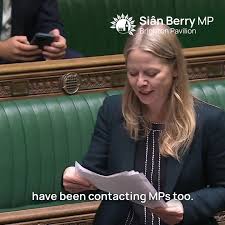 MP Sian Berry talking in Parliament about;
Battle of Lewes Roadclick to watch "
"We must never forget that 100 years ago the General Strike’s massive working class mobilisation shook the establishment to its core."
Sian Berry MP