
Brighton Tram 53 Society - Brakes
Basic Brakes on the tram.
In 1901, powerful hydraulic brakes had not yet been invented.
Although the tram weighed just 5 'imperial' tons and originally travelled at only 12mph, eventually rising to 20 mph, trams used hand-operated mechanical brakes that met the requirements, while a 'Slipper Brake' was also needed when travelling down extremely steep gradients.
In the UK, the Board of Trade (later the Ministry of Transport) set the regulations and initially limited the use of hand-operated mechanical brakes to speeds of up to 16 miles per hour (less in some specific cases).
All early traction vehicles used mechanical braking systems. The driver of the tram needed to apply physical force by hand to create movement (on early cars and lorries) or by foot. All early traction vehicles used mechanical braking systems. The driver of the tram needed to use physical force by hand to create movement (on early cars and lorries or by foot). Trams inherited the hand-applied wheel brake directly from horse trams.
The driver used a handle that operated a mechanical device under the floor to slow or stop the wheels.
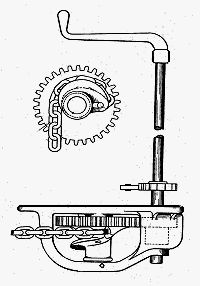
In the UK, the Board of Trade (later the Ministry of Transport) set the regulations and decided that hand-operated wheel braking could be used only up to 16 miles per hour (less in some specific cases).
Tram changes not only in construction design but in Mechanical design updated the braking system of later trams by installing an air tank and an electric compressor enabaling 'Air operated Brakes' which can be viewed on our tram 53.
Slipper Brake
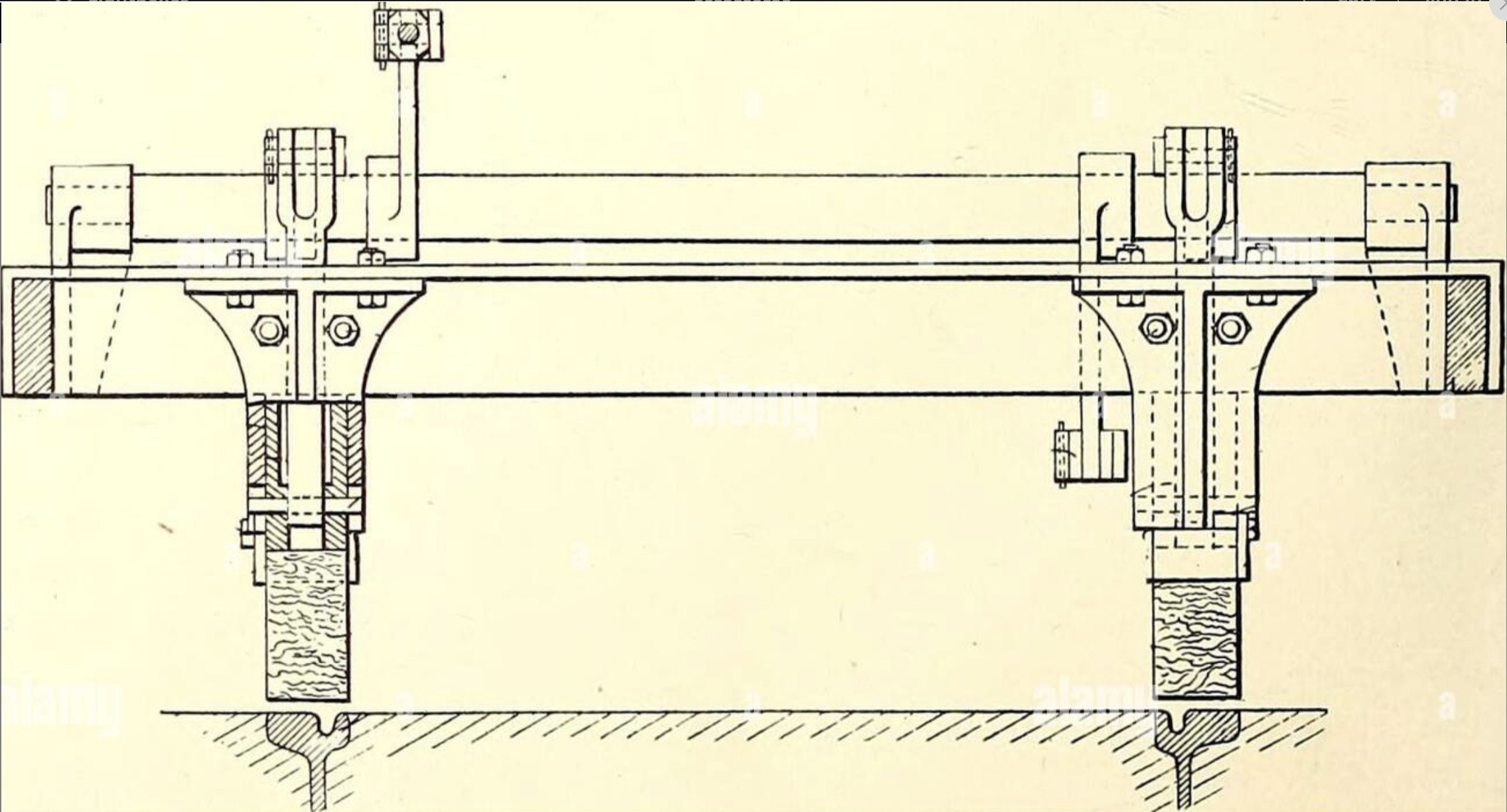
The Mechanism: Unlike standard wheel brakes that clamp the rotating wheels, a slipper brake utilized a block (often made of wood or cast iron) that was forced down directly onto the top head of the steel rail track.
Hill Safety: Because towns like Brighton featured highly graded routes, the UK Board of Trade heavily mandated strict safety rules.
A slipper brake acted as a separate, independent braking system. The motorman (driver) would mechanically "wind on" the track brake at the summit of a steep hill, maintaining a constant friction drag to control the tram’s speed throughout the entire descent and "hold" the weight of the tramcar back throughout the descent, ensuring the primary wheel brakes remained unlocked and fully capable of stopping the vehicle in an emergency. Once a heavy tram's wheels locked, it would lose adhesion and skid uncontrollably down the iron tracks.
The Brighton Slipper Brake was also used as a brake(hand) applied when the vehicle was statioary.
Brighton trams used the 'Brighton Slipper Brake ', which was redesigned by Brighton's General Manager (former engineer) Thomas B. Holliday from Slipper Brakes, designed in 1897.
This redesign addressed the dangerous, steep street gradients Brighton is built on.